

The MIRA Table and Pendant Lamps were designed and fabricated for Bagaceira, a material research and design practice focused on transforming sugarcane bagasse into interior products and materials. The lamps are made from Bagaceira’s Fiber Board, a material developed from sugarcane bagasse combined with biodegradable plant- and mineral-based binders. Often burned, discarded, or treated as low-value waste, bagasse is approached here as a material with both technical and aesthetic potential. The collection emerged through material testing and prototyping, including the development of a fibreboard recipe that could be shaped by hand over three-dimensional moulds. Natural clay and mineral pigments were used to create earthy tones connected to the material’s origin. The surfaces have a dense, tactile quality that many associate with stone. This became an important aspect of the project: although biomaterials are often perceived as fragile or temporary, these pieces were designed to feel sturdy, lasting, and worthy of care.

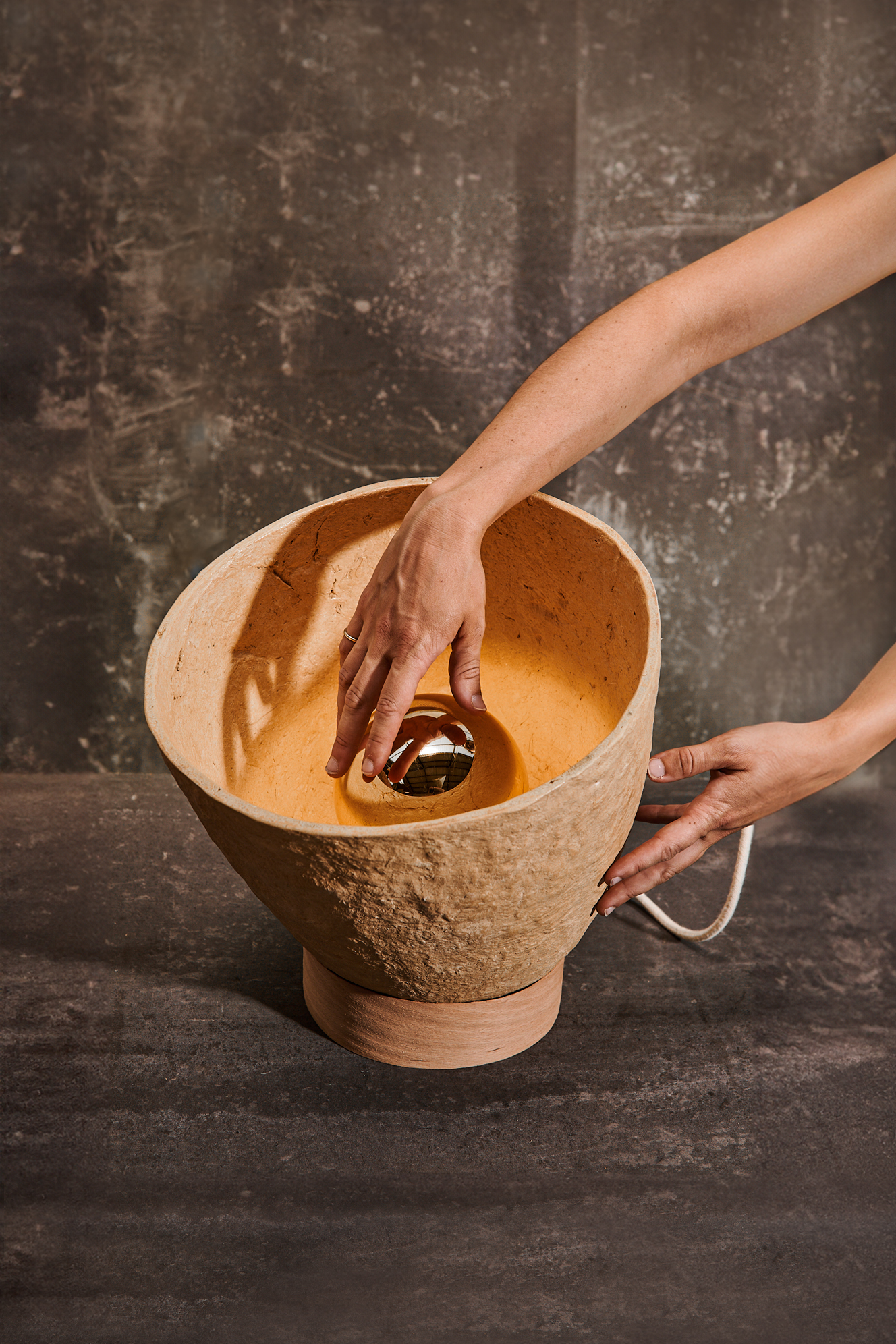

I developed this collection as part of my work with Bagaceira, where material research and product design are closely linked. The lamps are made from sugarcane bagasse sourced from sugar and rum production, redirecting an abundant agricultural byproduct into a higher-value application for interiors. Rather than treating this fibre as waste, the project approaches it as a starting point for designing objects with both environmental and sensory value.


The making process involved developing a custom fibreboard material and shaping it over three-dimensional moulds. I worked through multiple iterations to refine the material’s behaviour, surface quality, and structural performance. This process allowed the lamps to take on rounded forms while retaining a rich, irregular texture that reveals the handmade character of the material.
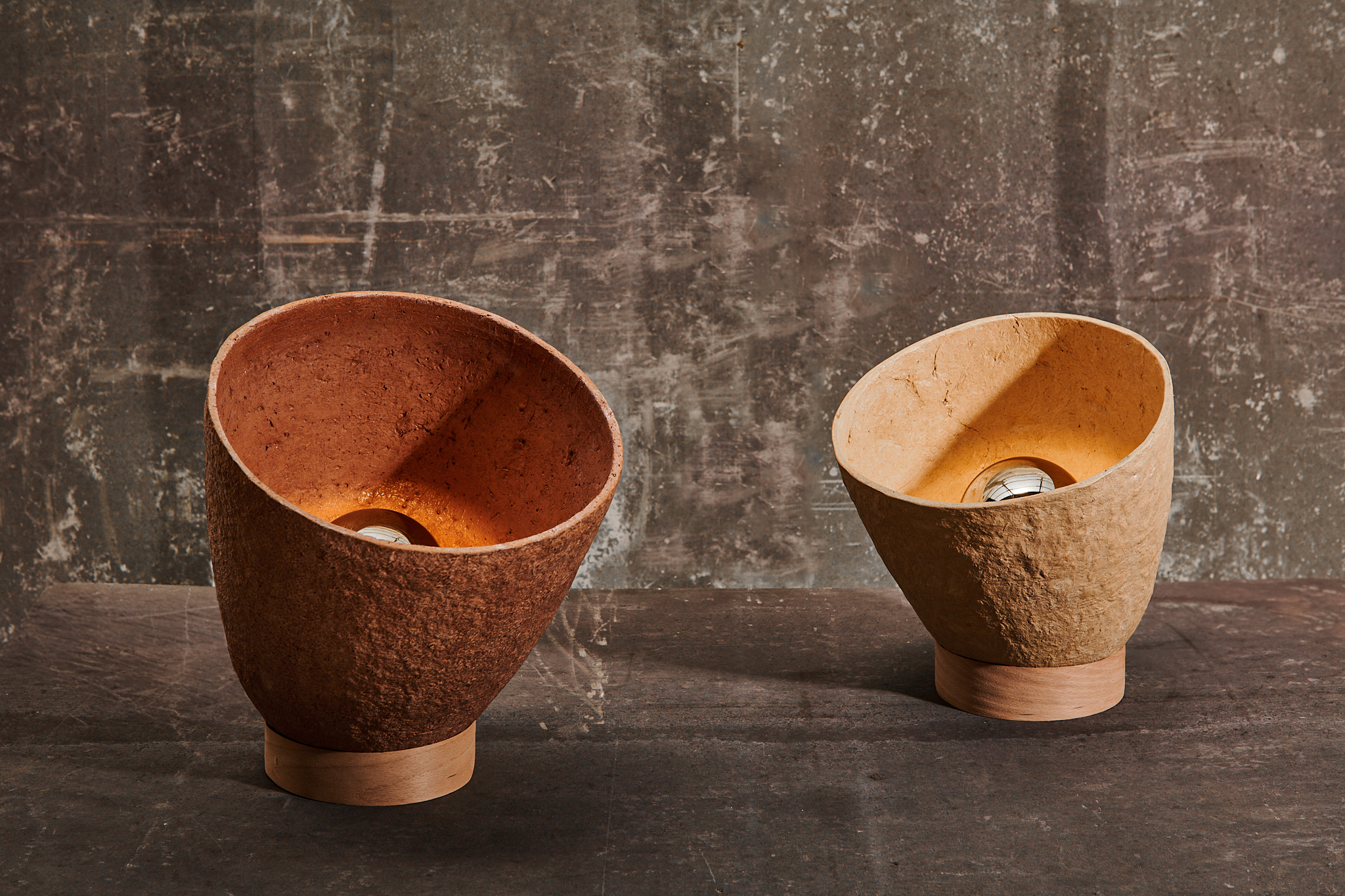
A key aspect of the project was the visual language of durability. Biomaterials are often associated with impermanence because they are biodegradable, even when designed to last for decades. With the MIRA lamps, I wanted to challenge that perception. Many people describe the material as stone-like, and I found that this association can shift how the object is valued: it suggests sturdiness, care, and a sense of permanence, even though the material is plant-based and biodegradable.
Photos by Cassandra Stuyt